[Press Review] Fluid Power Trends Reshaping Mobile Applications: Poclain’s Vision at the Forefront

>> Industry Transformation has been highlighted in a recent Power & Motion’s article, by Sara Jensen, Executive Editor, interviewing experts including Denis Greder.
In a recent feature published by Power & Motion (March 30, 2026), the magazine explores major technological trends reshaping fluid power systems in mobile applications. Based on industry insights and expert interviews, including perspectives from Poclain, the article highlights how automation, sensor integration, and electrification are redefining design priorities for OEMs.
This analysis comes at a pivotal time for industries such as construction, agriculture, and material handling, where increasing complexity, labor shortages, and sustainability requirements are accelerating innovation.
👉 Read the full article on Power & Motion
Key Market & Technology Trends Driving Fluid Power Evolution
According to Power & Motion, three major trends are shaping the future of fluid power systems in mobile equipment.
1. Automation and Precision as Core Drivers
Automation is emerging as the leading trend influencing machine design. OEMs are increasingly integrating automated functions to:
- Improve operator ease-of-use
- Address skilled labor shortages
- Enhance productivity and task accuracy
While fully autonomous machines remain limited, progressive automation of subfunctions such as steering, braking, and implement control, is rapidly advancing.
2. Rapid Growth of Sensor Integration
Sensorization is becoming essential, with 97% of surveyed professionals reporting increased sensor usage. Sensors now play a critical role in:
- Real-time monitoring and data collection
- Safety and redundancy systems
- Precision control and machine performance
Typical sensors include speed, position, temperature, and obstacle detection technologies.
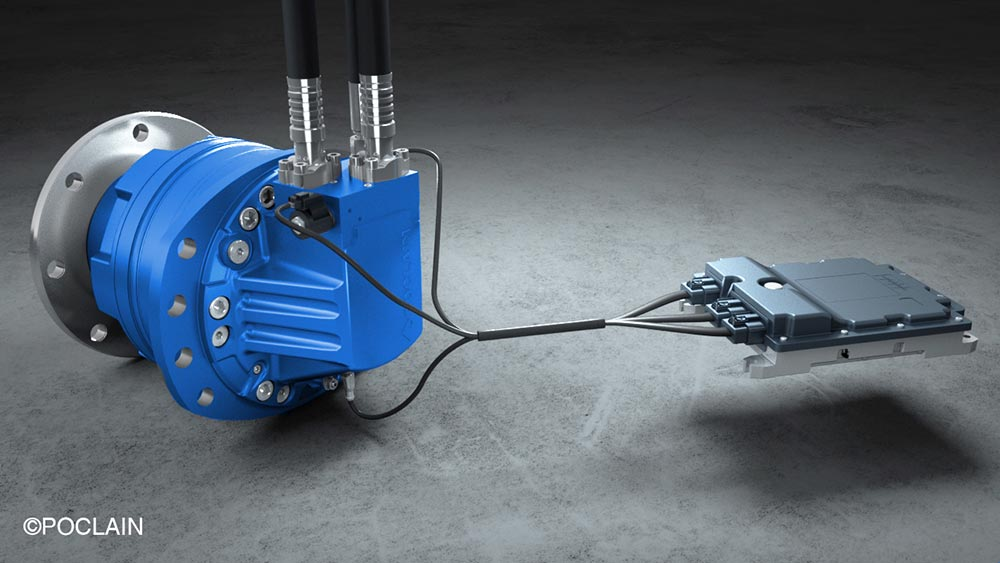
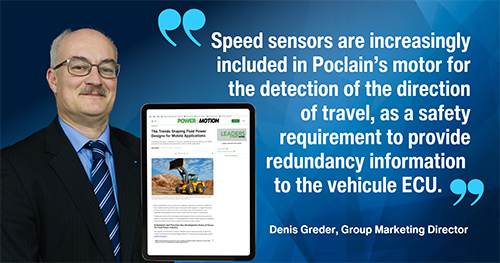
"Speed sensors are increasingly included in Poclain’s motor for the detection of the direction of travel, as a safety requirement to provide redundancy information to the vehicule ECU. Request for higher speed sensor resolution are also becoming more common due to the need for more accuracy," Denis Greder, Group Marketing Director at Poclain said.
3. Electrification and Hybrid Architectures
Electrification remains a key trend, although the market is shifting toward hybrid solutions combining electric and fluid power technologies. This approach enables:
- Improved energy efficiency
- Optimized system performance
- Practical implementation in demanding applications
👉 Full insights available here
Poclain’s Perspective: Enabling the Next Generation of Smart Machines
Insights shared by Denis Greder, position Poclain at the heart of these transformations.
Automation Through Intelligent Subsystems
Poclain highlights that while full autonomy is still emerging, automation is already transforming key machine functions. Denis Greder emphasizes that:
- Subfunctions such as steering, braking, and implement management are increasingly automated
- This evolution requires deep integration of electronics within fluid power systems
This aligns with Poclain’s strategy to deliver smart, controlled, and efficient drive solutions.
Sensor Integration as a Standard Requirement
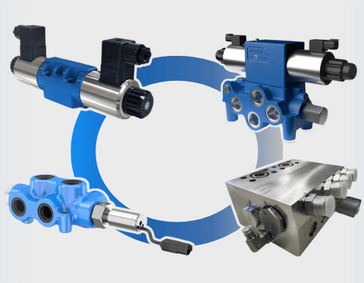
Poclain is experiencing a significant increase in demand for embedded sensors across its product range: motors, pumps, and valves. According to Denis Greder:
- Sensors are essential for performance accuracy and machine control
- They support safety requirements, including redundancy for vehicle ECUs
- Higher resolution sensors are increasingly required to improve positioning precision
Examples include:
- Speed sensors for travel direction detection
- Temperature sensors to prevent overheating
- Advanced sensing technologies for enhanced machine intelligence
Electrification Driving System Efficiency
From Poclain’s perspective, electrification is not just about full-electric machines. It is about optimizing system efficiency through intelligent design.
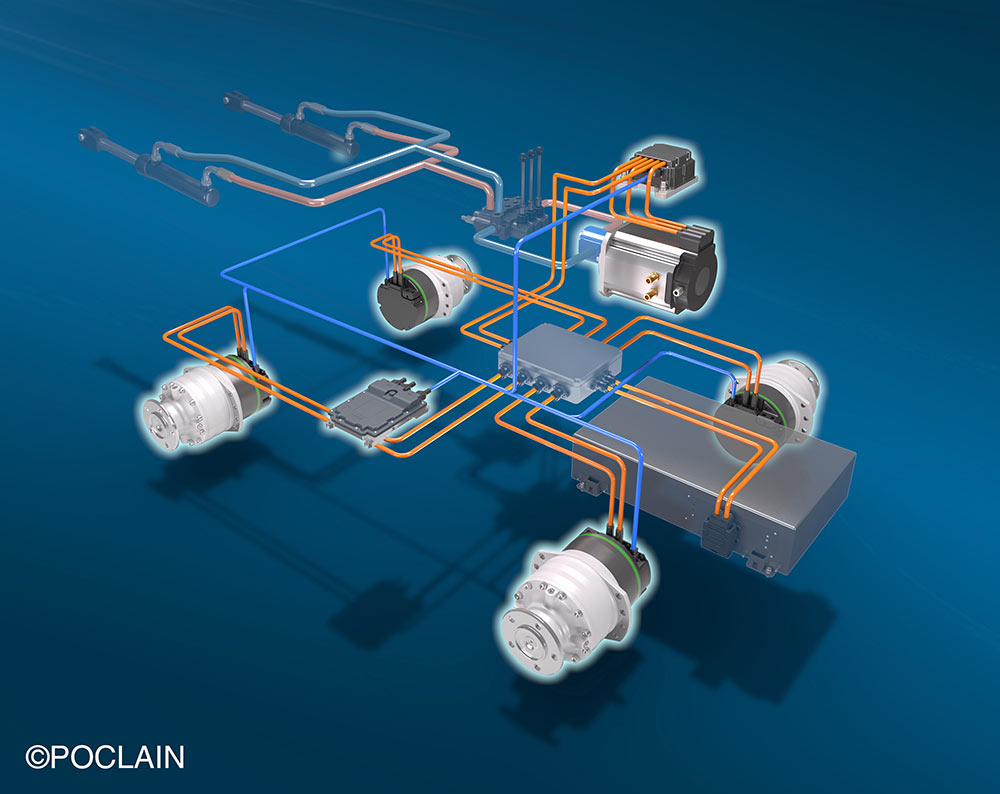
Denis Greder highlights several key developments:
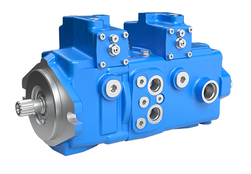
- Increased use of electronic control systems for pumps
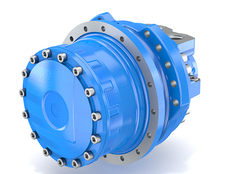
- Adoption of high-efficiency components, such as radial piston cam lobe motors
- Focus on reducing energy consumption to extend battery life
A notable example is Poclain’s gear auto-shift technology, which:
- Minimizes flow requirements
- Increases working pressure
- Improves overall system efficiency
This approach enables OEMs to:
- Extend machine operating time
- Reduce battery size and cost
- Enhance overall machine performance
👉 Explore the full discussion on Power & Motion
Conclusion: A Converging Future for Fluid Power and Electrification
As highlighted by Power & Motion, the future of mobile machinery lies in the convergence of automation, sensor integration, and electrification. Poclain’s insights demonstrate that:
- Fluid power remains essential for high-performance applications
- Integration with electronics is unlocking new capabilities
- Hybrid architectures offer the most practical path forward
With 92% of industry professionals still seeing strong opportunities for innovation, the fluid power sector is entering a new phase of transformation. One where efficiency, intelligence, and sustainability go hand in hand.
👉 Read the full article by Sara Jensen on Power & Motion
👉 Check out our Electrification offering
👉 Contact a Poclain expert to know more