
Targeting 100% Eco-Designed Products by 2030
The year 2025 marks the launch of EcoDesign at Poclain—an important milestone in the company’s commitment to sustainability, supported by the implementation of a Proof of Concept (PoC).
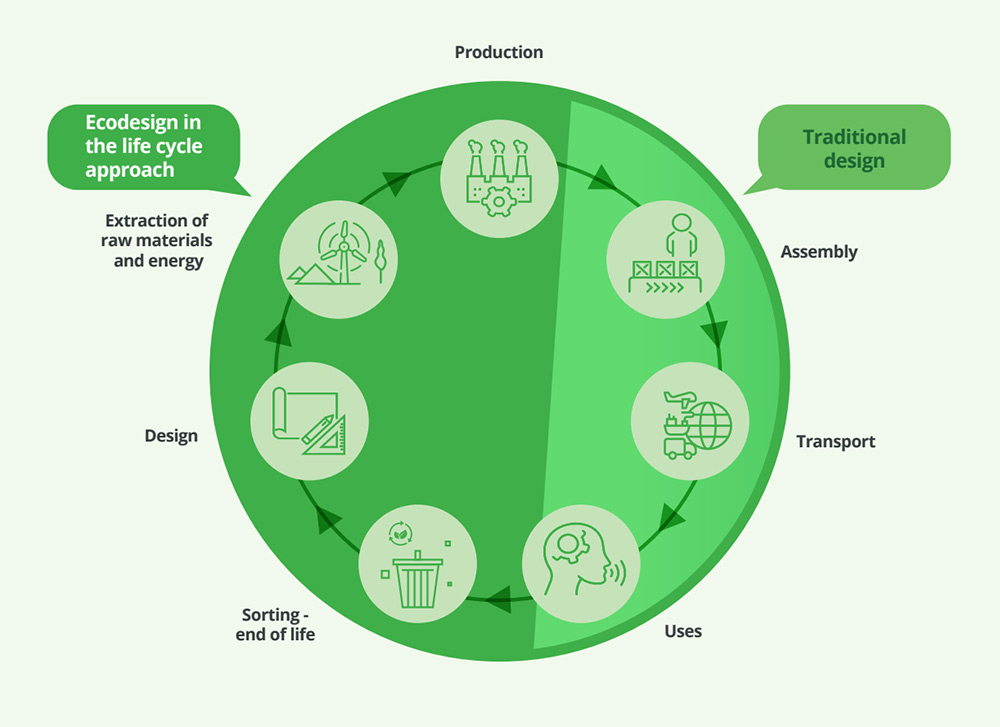
Our goal is to achieve 100% eco-designed projects by 2030, based on the widely accepted finding from international experts that up to 80% of a product’s environmental impact throughout its life cycle is determined during its design phase.
EcoDesign, a Strategic Priority
This initiative integrates environmental considerations from the earliest stages of product development to reduce impacts across the entire life cycle. It aligns with the European ESPR (EcoDesign for Sustainable Products Regulation), which encourages companies to embed environmental criteria into their development processes.
As customer and partner expectations increasingly shift toward lower environmental impacts, EcoDesign is becoming a strategic focus area for Poclain.
An Ambitious, Collaborative Pilot Project
A transformation of this scale requires involvement from all areas of the business—manufacturing, purchasing, logistics, transportation, and more.
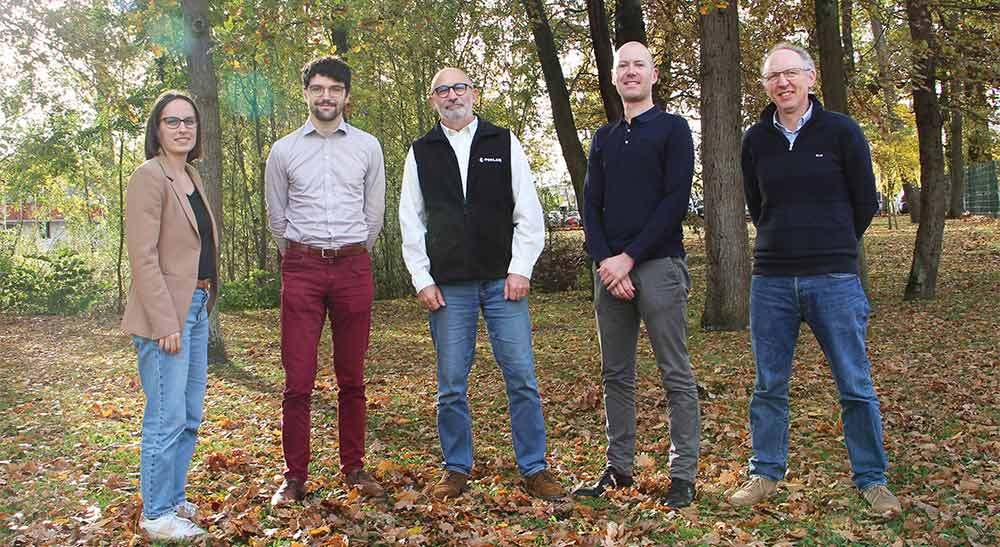
To ensure a fully integrated approach, a multidisciplinary team was formed as part of a PoC focused on designing a hydraulic motor. The team includes six experts: Adeline Beaufreton (Product Buyer), Justin Darnet (Embedded Software Specialist), Stéphane Vidal (Design Senior Expert – DIP Excellence), Nicolas Madelmont (Materials Expert for Design – S&T), Antoine Galea (Cost Engineer), and Christophe Bonnaire (Project Management Tools Specialist).
The Poclain team assesses environmental impact using collected data combined with international databases. This evaluation is performed using a software solution that covers greenhouse gas emissions, water consumption, natural resource use, and more.
EcoDesign as a Core Pillar of the Development Process
The objectives of this PoC are clear and measurable:
- Quantify the environmental impacts of our products—especially CO₂—equivalent emissions and water consumption—in line with our CSR roadmap
- Identify opportunities to reduce the environmental footprint of our products
- Define an efficient system for data collection and result analysis
- Train teams so they can participate in future projects and serve as local ambassadors across our development sites
“In the long term, this approach will be extended to all product and system lines, making EcoDesign a core pillar of our development process,”
Contact us to learn more
Our CSR commitments
Sources :
Ministère de la transition écologique https://www.ecologie.gouv.fr/politiques-publiques/leco-conception-produits
European Commission, Energy, Climat Change, Environment https://environment.ec.europa.eu/strategy/circular-economy_en
Ecodesign for Sustainable Products Regulation
Circular Economy