
Poclain Aftersales in China: 20 Years of Customer Proximity and Field Expertise
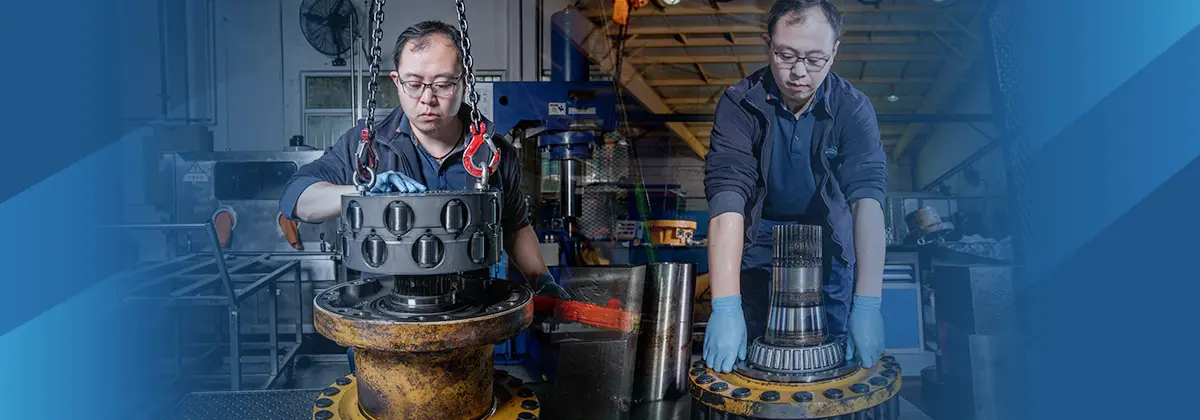
Delivering a product does not mark the end of Poclain’s support. For users of construction machinery, agricultural machinery, mining equipment and industrial applications, a truly long-term partnership often begins when the equipment starts operating.
When a machine comes to a stop in the field or on a production line, the OEM is concerned about more than whether a particular component can be repaired. They also want to know how quickly the root cause can be identified, when the equipment can resume operation and whether the same issue can be prevented from recurring. This is where the true value of aftersales service lies.
It All Began with a Repair Workshop
The history of Poclain’s aftersales service in China dates back to the early years of its Beijing operation, when a repair workshop was established to provide maintenance and technical support for Poclain products in the Chinese market.
In 2012, the repair operation was relocated from Beijing to Poclain’s Shanghai plant, where the company established its first Certified Repair Center in Shanghai: PHSHA 000 CRC.
Supported by the plant’s manufacturing, quality, process and technical resources, the aftersales team was able to carry out product inspections, failure analysis, repairs and performance validation more efficiently.
This relocation represented more than a change of service location. It also marked the beginning of a more standardized and systematic approach to aftersales service at Poclain China.
Bringing Professional Service Closer to Customers
As Poclain products were adopted more widely across the Chinese market, demand for on-site support and rapid response continued to grow.
Since 2017, Poclain China has successively set up external Certified Repair Centers, including Jielixing, Dongchuan Precision and Kejun Xinda. Together with Poclain’s internal team and the Shanghai repair center, these regional CRCs have gradually formed an tightly knit and consistent service network.
Becoming a Poclain CRC involves much more than receiving a certification. A partner’s business strategy must be closely aligned with Poclain’s development requirements in the local market. In accordance with the Poclain’s standards, the partner must also undergo rigorous assessments covering personnel capabilities, repair processes, equipment configuration, quality control and testing capabilities.
Consistent standards, professional training and continuous capability development ensure that customers receive reliable and consistent service throughout the territory. During the repair process, Certified Repair Centers use genuine Poclain spare parts and validate the results through standardized hydraulic performance and leakage testing.
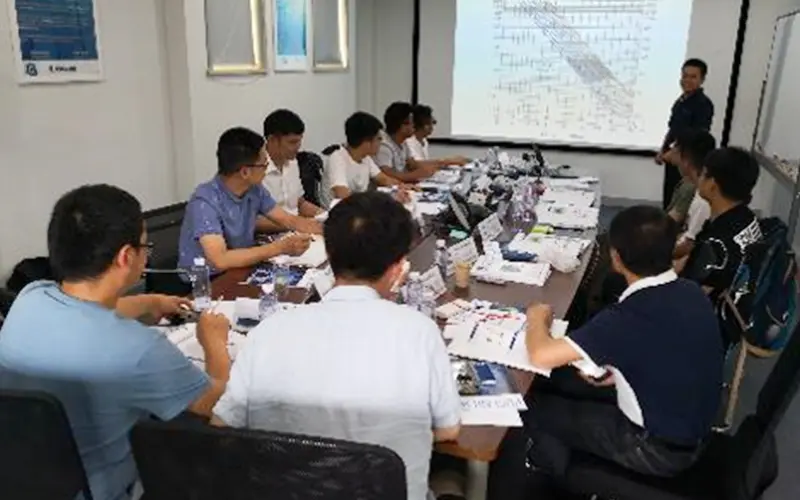
From Repair to Root Cause Identification
In 2021, Poclain China officially launched its aftersales service hotline, providing customers with a direct channel for technical support.
Technicians can conduct an initial diagnosis by telephone or video and, depending on the specific situation, coordinate on-site support, product inspection, repair services or spare-parts supply.
To date, Poclain China’s aftersales team has served more than 1,000 customers and provides various forms of aftersales support to approximately 150 customers each year.
As Poclain components gain ground on the Chinese market, increasing demand for field service pushes the teams to be more responsive and qualified to analyze complex issues. Reaching the customer’s site quickly is important, but the real challenge is identifying the root cause of the problem.
Pressure, flow, oil condition, installation method, load and actual operating conditions can all affect machine performance. Aftersales technicians need more than technical training on individual products. They must also be able to assess issues from the perspective of the complete machine system and its application environment.
This is where the value of original-manufacturer aftersales service becomes clear. The objective is not only to determine which component is at the source of an issue, but also to understand why the problem occurred and how its recurrence can be prevented.
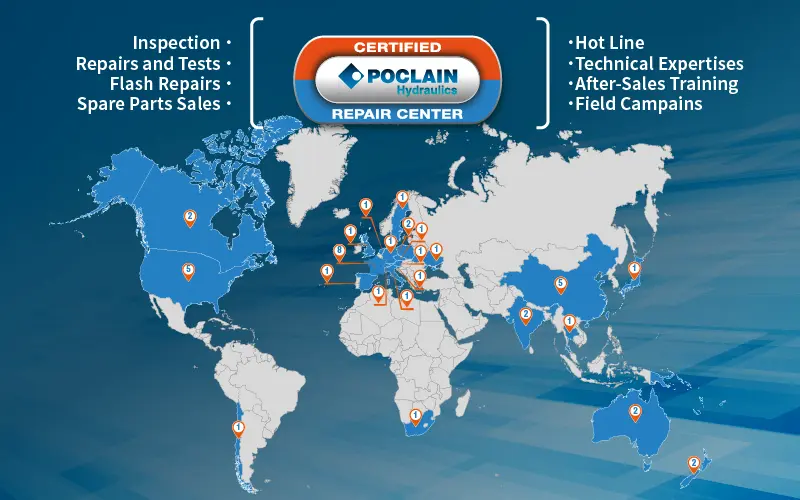
A Global Network of 50 CRCs Supporting Customers Worldwide
Poclain has 50 Certified Repair Centers worldwide, providing consistent repair standards and professional expertise with local service resources.
For Chinese customers accelerating their international expansion, this means that machines equipped with Poclain products can give access to professional diagnosis, repair and spare-parts support through the global CRC network, wherever it operates.
This network gives customers greater confidence as their equipment enters international markets and provides stronger support for reliable operations worldwide.
Supporting the Entire Product Lifecycle
Today, Poclain’s aftersales service extends well beyond repairs following a failure. It also covers on-site technical support, preventive maintenance, customer training, genuine spare-parts supply and remanufacturing services.
Digital tools are also changing the way aftersales support is delivered. The Poclain eShop provides a digital access point for identifying spare parts and consulting repair documentation, while phone and online customer service channels help technicians understand field conditions at an earlier stage and improve service coordination.

From the original repair workshop in Beijing to the PHSHA CRC in Shanghai, and from there to a service network connected globally, the twenty-year development of Poclain China’s aftersales service has been a continuous journey of moving closer to customers and strengthening professional capabilities.
Looking ahead, Poclain China will continue to expand its service coverage, enhance the capabilities of its aftersales team and CRC partners, and provide customers with more timely and reliable support throughout the product lifecycle.
Truly dependable aftersales service is not simply about repairing a product. It is about responding promptly when customers need support, identifying the root cause when complex problems occur, and applying professional standards to help keep equipment operating reliably once it is back in service. Wherever the equipment goes, professional service follows.